The dissenter
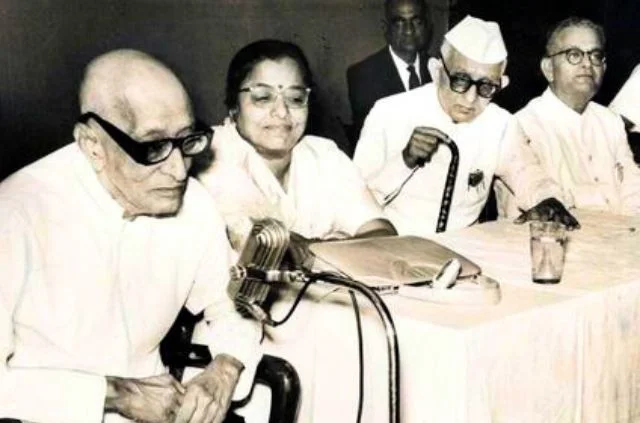
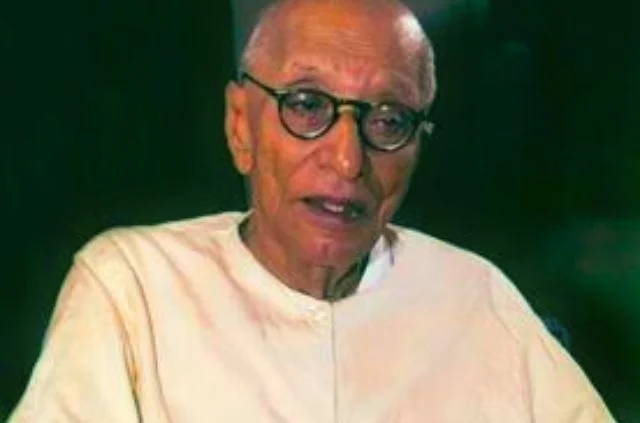
At eighty, a former Governor-General, Home Minister and Chief Minister left the governing party and built an opposition to it. Swatantra lasted fifteen years, won more seats than any other opposition party in 1967, and then disappeared.
The resolution that started a party
In January 1959 the Congress met at Nagpur and resolved in favour of cooperative joint farming and state trading in foodgrains. To its authors this was the logical extension of planned development into agriculture. To Rajaji it was the moment the argument stopped being about factories and started being about land, food and the peasant household.
He had been writing against economic controls for several years in his weekly journal. Now he moved from journalism to organisation. A new party was announced in Madras in June 1959 and formally constituted at a convention in Bombay that August, with N. G. Ranga as its first president and Minoo Masani as its principal organiser. Its name, Swatantra, means independent, or free.
Its founding statement of principles committed it to limiting state ownership and control, protecting the cultivator’s right to his land, opposing further concentration of power in Delhi, and defending individual enterprise against administrative discretion.
Two answers to the same country
Both positions were held by serious people who had spent their lives in the freedom movement. The comparison below uses the terms of the period rather than the vocabulary of present-day politics.
Seats won in the Lok Sabha
Bars are drawn in proportion to the party’s best result (44 seats in 1967), in a house of roughly five hundred seats. Reported national vote shares for the party differ between sources and are therefore not given here.
Swatantra contested its first general election in 1962 and won eighteen seats. In 1967, as the Congress lost ground across northern and western India, it won forty-four — more than any other opposition party in that Lok Sabha — and entered state governments in coalition, most notably in Orissa.
Its strength was regional rather than national: Gujarat, Rajasthan, Orissa, Bihar and parts of Andhra Pradesh, where former princely families, landholders and traders gave it an organisational base the party had not built for itself.
That base was also its vulnerability. Opponents argued that a party of princes and proprietors could not credibly speak for economic freedom in general, and the charge stuck. In 1971 Indira Gandhi fought a national campaign on the promise of removing poverty, and Swatantra was reduced to eight seats.
Rajaji died in December 1972. The party merged into the Bharatiya Lok Dal in 1974 and ceased to exist as an independent organisation.
A party that failed and an argument that did not
Judged as an organisation, Swatantra was a failure: it never held national office, never built a mass membership, and did not outlive its founders by more than a few years.
Judged as an argument, its record is different. The critique of industrial licensing that Swatantra made in the 1960s was made again, by governments rather than oppositions, from 1991 onwards. Some of its former members and many of its ideas resurfaced in later Indian liberal politics.
Both judgements are defensible, and neither is generous or hostile by itself. Historians of the period generally agree on the facts and divide over which judgement matters more.